
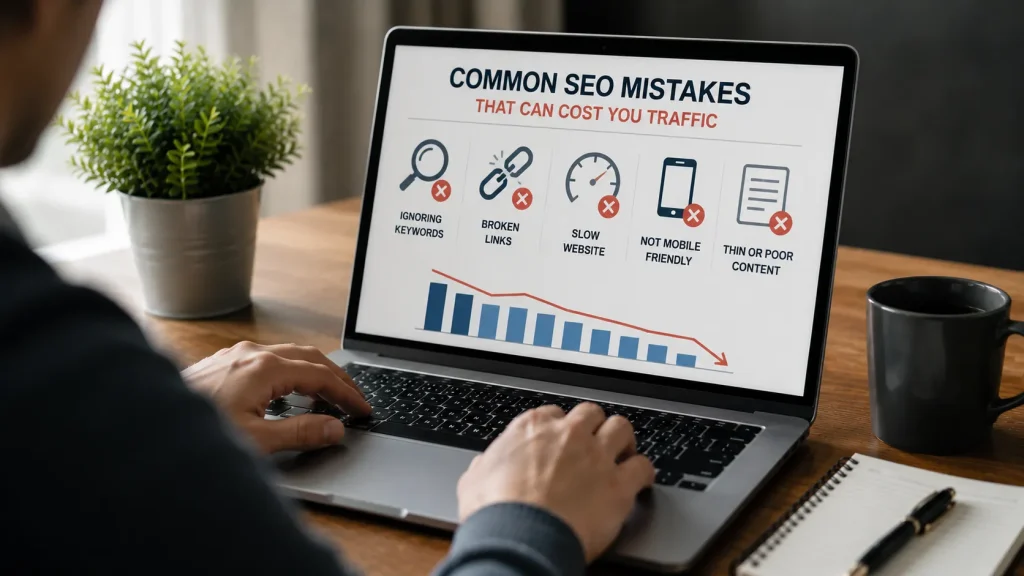
Search visibility depends on strong foundations, yet many websites lose rankings because of avoidable SEO Mistakes. Google updates its algorithms thousands of times yearly, and even small issues can reduce organic traffic. Poor keyword usage, slow loading speeds, and weak internal linking often prevent pages from reaching their potential.
We see many businesses focus heavily on content creation while ignoring technical details. According to Google research, 53% of mobile users leave a page that takes longer than three seconds to load. Search engines also prioritize relevance, page experience, and helpful information. Ignoring these factors creates unnecessary barriers.
Understanding common SEO Mistakes helps websites improve rankings and user experience. Search engines reward pages that answer questions clearly and provide fast access to information. By fixing common problems, websites can maintain steady visibility and attract qualified visitors.
Strong SEO requires consistency and regular reviews. Small adjustments often deliver significant gains. Knowing what to avoid allows us to build content that performs better over time.
Ignoring Search Intent
Why Search Intent Matters
Search intent explains why users perform a query. Google aims to match pages with user expectations. One of the biggest SEO Mistakes involves targeting keywords without understanding intent.
For example, someone searching “how to optimize images” expects guidance, not a product page. Misaligned content increases bounce rates and reduces engagement signals. Google evaluates whether users find answers quickly.
We should classify intent into four categories:
- Informational.
- Navigational.
- Commercial.
- Transactional.
Matching content to the correct intent improves relevance and ranking opportunities.
Signs of Intent Mismatch
Several indicators reveal intent issues:
- High bounce rates.
- Low average time on page.
- Poor click-through rates.
- Declining rankings.
Updating headings, adding FAQs, and improving content depth often resolve these problems.
Keyword Stuffing and Weak Content
Overusing Keywords Hurts Rankings
Many websites still repeat keywords excessively. This remains one of the oldest SEO Mistakes. Google’s helpful content systems favor natural language and valuable information.
Keyword stuffing creates poor readability. It also reduces trust. Search engines understand context and related terms. Repeating the same phrase dozens of times provides no advantage.
Instead, we should focus on:
- Related keywords.
- User questions.
- Clear headings.
- Practical examples.
Content should solve problems rather than chase keyword density.
Thin Content Creates Problems
Pages with little information struggle to rank. Thin content lacks depth and expertise. Original insights and examples improve authority.
SEO consultant Aleyda Solis recommends creating content that addresses complete user journeys. Comprehensive pages usually earn more backlinks and longer engagement times.
Technical SEO Mistakes That Affect Performance
Slow Pages and Mobile Issues
Technical problems remain among the most damaging SEO Mistakes. Google introduced mobile-first indexing because most searches occur on smartphones.
Page speed directly influences user satisfaction. According to Google, mobile visitors abandon pages after three seconds of waiting. Compressing images and reducing unnecessary scripts improves loading times.
Common technical issues include:
- Broken links.
- Duplicate pages.
- Missing XML sitemaps.
- Poor Core Web Vitals.
- Unoptimized images.
Regular audits help identify these problems before rankings decline.
Missing Metadata and Structured Information
Title tags and meta descriptions influence click-through rates. Missing metadata reduces visibility. Search engines also use structured data to understand page topics.
Adding schema markup helps Google interpret content accurately. Structured information may increase rich result opportunities.
Poor Internal Linking and Neglecting User Experience
Internal Links Strengthen Authority
Internal linking distributes authority across a website. Ignoring this strategy ranks among common SEO Mistakes. Links help search engines discover pages efficiently.
Good internal links:
- Improve navigation.
- Increase page views.
- Support topical authority.
- Help indexing.
Anchor text should remain descriptive and natural. Users should easily find related information.
User Experience Influences Rankings
Google evaluates page experience through Core Web Vitals. Intrusive popups, difficult navigation, and cluttered layouts frustrate visitors.
Experienced SEO professionals recommend prioritizing readability. Short paragraphs, clear headings, and responsive design improve engagement. Better user experiences often lead to stronger rankings and longer sessions.
Common SEO Problems and Solutions
| SEO Issue | Impact on Traffic | Recommended Solution |
|---|---|---|
| Keyword stuffing | Lower relevance | Use natural language |
| Slow loading speed | Higher bounce rate | Compress images and improve caching |
| Thin content | Weak rankings | Add original insights and depth |
| Broken links | Poor user experience | Conduct regular audits |
| Missing metadata | Lower click rates | Optimize titles and descriptions |
| Weak internal linking | Reduced authority flow | Link related pages naturally |
| Mobile usability issues | Ranking decline | Implement responsive design |
Best Practices to Avoid SEO Errors
Following proven practices reduces risk and improves long-term growth:
- Perform content audits regularly.
- Understand search intent before writing.
- Optimize images and page speed.
- Build strong internal links.
- Create original and helpful content.
- Monitor technical issues frequently.
- Improve mobile usability.
- Update outdated articles.
These habits support sustainable organic traffic growth. Get started with our in-depth resource on Why On-Page SEO is Just as Important as Off-Page SEO.
Conclusion
Avoiding common SEO Mistakes helps websites maintain visibility and improve user experience. Search engines reward pages that provide useful information and strong technical performance. Issues such as keyword stuffing, weak content, slow loading speeds, and poor internal linking can reduce rankings over time.
We should focus on user intent, content quality, and technical health. Regular audits and continuous improvements create stronger foundations for long-term traffic growth. Websites that prioritize helpful experiences and clear structure remain better positioned to succeed in search results.